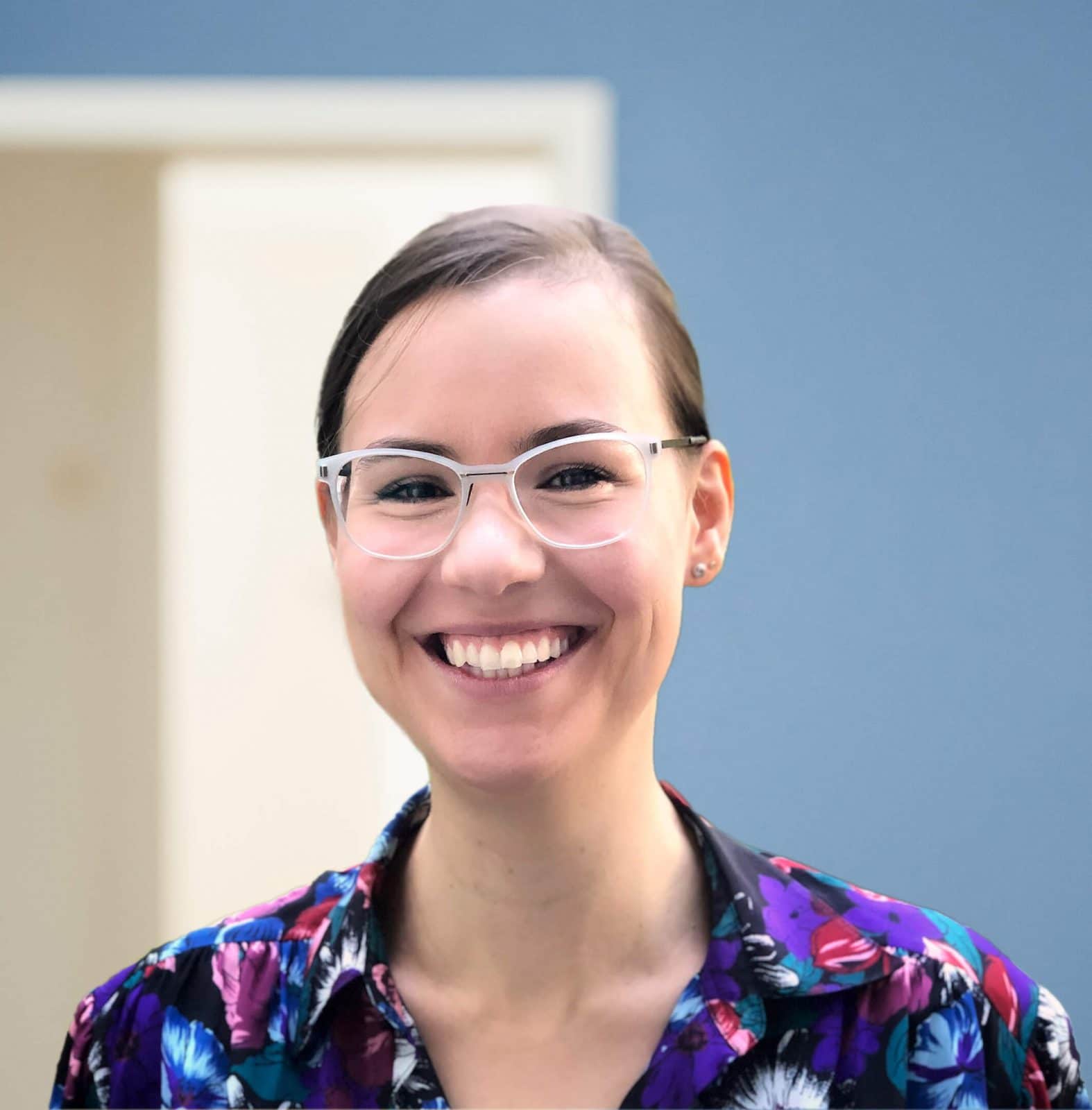
Dr. Barbara Boelmann
Cluster position YEP Postdoc
Cluster member since 2021
Research Areas
Main research topics
Social and gender norms, equal opportunities, labour economics
CV
Barbara Boelmann is a postdoctoral researcher at the University of Cologne, a YEP Fellow of ECONtribute, and a researcher at the Research Data Centre Ruhr (RWI). She is also affiliated with C-SEB, the Collaborative Research Center Transregio 224 (CRC TR 224), and the Institute of Labor Economics (IZA).
She received her PhD in Economics from University College London (UCL) and the Centre for Research and Analysis of Migration (CReAM) in 2022. She holds an MSc in Economics and a BA in Economics and Chinese Studies, both from Ruhr University Bochum.
Barbara Boelmann is an applied labour economist whose research focuses on inequalities in education and the labour market, with a particular emphasis on gender inequalities. She is especially interested in how regional institutions, culture, and local power dynamics shape and reinforce these inequalities. Since November 2024, she has held an Add-on Fellowship for Interdisciplinary Economics awarded by the Joachim Herz Foundation.
Publications
Discussion papers
Interview
What is the best thing about your job?
Understanding things that are important to me in depth and drawing meaningful conclusions from them that help society move forward as well as working with people with diverse interest, and the maximum flexibility, which I appreciate, especially as a mother of a small child.
If you had not gone into research, what would you be doing today?
I used to want to become a professor of Classical Latin. For my undergraduate degree, I studied Sinology in addition to Economics and could imagine working in cultural exchange between China and Germany. However, in the end, I saw the greatest potential for me personally to contribute to society using empirical research.
Who or what inspires you?
The goal of equal opportunities: As a researcher, I would like to understand social inequality, which still exists even in a society like Germany’s, as understanding is key to making changes towards equal opportunities.
When was the last time you had to change your mind?
What surprised me the most was more of a long-term change: During my undergraduate studies, I was convinced that all opportunities were equally open to women and men in Germany. However, the more I looked into it, the more I began to realize that we still have social and institutional barriers that prevent equality.
Which advice would you have needed yourself as a doctoral student?
That it is okay to ask for help sometimes. The doctorate is part of your education and you don’t have to constantly prove yourself and show what you are already capable of.